Reposted from: http://perpetualartistsblock.tumblr.com/post/7795344449/how-to-identify-inaccuracies-about-dinosaurs
I’m a stickler for accuracy when it comes to dinosaurs, so I felt like making a quick list of inaccuracies. Obviously, no one cares, but it makes me feel better, so yeah.
Pronated Hands - If you see a theropod dinosaur like Tyrannosaurus or Velociraptor with its hands parallel to the ground, that’s inaccurate! All theropod dinosaurs (along with their close relatives, sauropodomorphs like Plateosaurus and Massospondylus) could not rotate their arms to have their palms face the ground, and thus always kept them facing each other.
Tripod Stance - Next up on the list of inaccuracies with theropods is the tripod stance, in which the tail is dragging on the floor, and the dinosaur’s body is held vertically. It’s now known that dinosaurs always held their tails up in the air, and kept their backs horizontal. (Thus, this also applies to sauropods who have their tails dragging on the ground behind them, but this obviously isn’t tripod stance) It is thought, however, that diplodocid sauropods and stegosaurs may have gone into a tripod-like stance to reach higher vegetation, so an image depicting this shouldn’t be thought as inaccurate.
Vertical Neck Sauropods - Now, to clarify, this only really applies to diplodocid sauropods like Diplodocus and Apatosaurus, as macronarians like Brachiosaurus and Camarasaurus definitely held their necks higher up, so as not to compete with diplodocids. Diplodocid sauropods usually held their necks horizontal, which, along with their tail being held up, would help in balance. Now, this isn’t to say that they couldn’t raise their neck up and down, but they didn’t hold them up completely vertical like say, a giraffe.
Dromaeosaur Tail Flexibility - Dromaeosaurs like Deinonychus and Velociraptor had tails supported by what are called “ossified tendons”, which act as stiff rods that kept the tail straight for the most part. Thus, they could not perform any serpentine wiggling or curling. Now, this isn’t to say that they were completely inflexible, but they couldn’t curl to a very great degree.
Theropod Digits - Basically, most theropods have three digits. Some, like tyrannosaurs, only had two (although more basal species had three). So any “Tyrannosaurus” depicted with three fingers is inaccurate. No theropods had any number greater than three (some older species had a small protrusion where the fourth digit was, and Carnotaurus had a spur-like fourth digit)
Non-Dinosaurs - One of the most wide-spread of inaccuracies is basically just mistaking other ancient reptiles for dinosaurs. Dinosaurs are purely terrestrial (unless of course you bring birds into the equation) archosaurs (Archosauria being the group which contains dinosaurs, crocodiles, pterosaurs, and birds, as well as some others) that lived solely in the Mesozoic (again, unless you count birds). This means that pterosaurs (or pterodactyls) are not dinosaurs, since although they are also mesozoic archosaurs, they were capable of flight, and thus not fully terrestrial. Even farther from dinosaurs are ichthyosaurs, plesiosaurs, mosasaurs, and pliosaurs, groups of marine reptiles that lived in the Mesozoic, since these aren’t even in Archosauria. Ichthyosaurs are off by themselves, while plesiosaurs, pliosaurs, and mosasaurs are in Lepidosauromorpha, plesiosaurs and pliosaurs being in their own group of Sauropterygia while mosasaurs are in Squamata. These groups were completely marine, and most likely never came ashore, and thus, are not dinosaurs. Another group confused with dinosaurs are the reptiles of the Permian, like Dimetrodon (a quadrupedal sail-backed reptile). There were no dinosaurs in the Permian, since dinosaurs only appeared in the Mesozoic, while the Permian is in the Paleozoic.
Tuesday, July 26, 2011

Wednesday, July 20, 2011
Hadrosaurus

The first complete dinosaur skeleton ever was found in Haddonfield, NJ in 1958. This statue was built in the dinosaurs honor in 2003.
More info here: http://hadrosaurus.com/1858.shtml


Friday, June 10, 2011
Deinonychus Toe Claw

We were driving in the car yesterday and Desmond told Matt that he was a deinonychus. Matt said it would be hard to drive with the toe claw. The toe claw would probably make a hole in the car.
Des said "Daddy, you just lift the toe claw up."
Of course.
Deinonychus means "terrible claw", but this claw may not have been so terrible.
Scientists used to think that the deinonychus used its toe claw to rip open its prey, thinking that the claw was sharp enough to slash through skin. They have done tests and now think that the toe claw was used to stab and puncture. Their teeth was probably what killed their prey.
Deinonychus did lift the large toe claw up when it walked.
Source: http://en.wikipedia.org/wiki/Deinonychus
Thursday, May 12, 2011
Daspletosaurus

Ever since I've seen the Dinosaur Train episode "My Great Big Stomping Dinosaur Feet," I've been interested in Daspletosaurus.
My favorite part is the song they sing, which I cannot find video for. It's an awesome song about having big dinosaur feet.
I did find a video of Daphne Daspletosaurus and Buddy comparing features.
Dr. Scott talks about Daspletosaurus
Pronunciation: dass-PLEE-tuh-SAWR-us
Translation: Frightful Lizard
Also known as:
Description: Carnivore,Bipedal
Order: Saurischia
Suborder: Theropoda
Infraorder: Tetanurae
Micro-order: Carnosauria
Family: Tyrannosauridae
Height: 16 feet (4.9 meters)
Length: 30 feet (9.1 meters)
Weight: 5,950 lbs (2,700 kg)
Period: Late Cretaceous

Notes: Discovered in Alberta, Canada, Daspletosaurus was a contemporary of Albertosaurus. A marginally smaller, close relative of Tyrannosaurus, Daspletosaurus' possessed the typical tyrannosaurid two-fingered hands, but its powerful jaws were equipped with larger (although fewer) teeth than Tyrannosaurus. It is conjectured that the heavily-built Daspletosaurus preyed upon ceratopsians.
Source: http://www.dinodictionary.com/dinos_d.asp
More info on Daspletosaurus: http://en.wikipedia.org/wiki/Daspletosaurus
Sunday, March 13, 2011
Wednesday, March 2, 2011
Dino Diarrhea....and God!
The other night Des asked if dinosaurs had diarrhea. I told him probably and am now doing research.
First site I found: http://www.angelfire.com/mi/dinosaurs/dinodeath.html
"I believe that Dinosaurs were created on Day 6, the same day as Adam. I believe that they lived for a few thousand years, until the flood came. Noah took 2 of every kind of animal onto the ark, including dinosaurs. The harsh post-flood environment made it hard for the dinosaurs to live long after this. Some may have been hunted to extinction, and others were unable to survive as they degenerated (part of the curse God placed on the earth when Adam sinned), and lost some of their original abilities (the T-rex lost use of its arms for instance, as they shriveled and became useless).
How dinosaurs became extinct is one of the greatest questions of all time.
Those who do not believe the Biblical account of Creation have to come up with other theories.
Some have suggested that the dinosaurs were killed when a giant meteor hit the earth.
Some people believe that the dinosaurs died from diarrhea,
and others believe that they died of constipation.
(seriously.. they've spent millions of your tax dollars trying to prove this!)"
I'm laughing so hard right now!
First site I found: http://www.angelfire.com/mi/dinosaurs/dinodeath.html
"I believe that Dinosaurs were created on Day 6, the same day as Adam. I believe that they lived for a few thousand years, until the flood came. Noah took 2 of every kind of animal onto the ark, including dinosaurs. The harsh post-flood environment made it hard for the dinosaurs to live long after this. Some may have been hunted to extinction, and others were unable to survive as they degenerated (part of the curse God placed on the earth when Adam sinned), and lost some of their original abilities (the T-rex lost use of its arms for instance, as they shriveled and became useless).
How dinosaurs became extinct is one of the greatest questions of all time.
Those who do not believe the Biblical account of Creation have to come up with other theories.
Some have suggested that the dinosaurs were killed when a giant meteor hit the earth.
Some people believe that the dinosaurs died from diarrhea,
and others believe that they died of constipation.
(seriously.. they've spent millions of your tax dollars trying to prove this!)"
I'm laughing so hard right now!
Monday, February 28, 2011
Dinosaurs and Plant Evolution
Text from this article: http://blogs.smithsonianmag.com/dinosaur/2011/02/flowers-pine-cones-and-dinosaurs/?utm_source=feedburner&utm_medium=feed&utm_campaign=Feed%3A+smithsonianmag%2FDinosaur+%28Dinosaur+Tracking%29&utm_content=Google+Reader
When we think about the Mesozoic world, dinosaurs often dominate our attention. They are the stars of countless museum displays and restorations, and everything else about their world just seems like window dressing. When visitors to Yale’s Peabody Museum look at Rudolph Zallinger’s beautiful (if outdated) “Age of Reptiles” mural, their attention is drawn to the tubby Allosaurus and the “Brontosaurus” wallowing in the swamp. The plants and animals Zallinger painted around the dinosaurs simply provide the setting for the more charismatic monsters.
But as with modern ecosystems, we can’t fully understand the lives of dinosaurs without knowing something about the supporting cast of organisms they lived alongside, especially plants. After all, plants were food to many, many dinosaur species, and plants undoubtedly influenced the evolution of dinosaurs just as dinosaurs influenced the evolution of plants. In fact, in a 1978 Nature paper, paleontologist Robert Bakker went so far as to suggest that dinosaurs had “invented” flowers.
Bakker’s reasoning went like this. During the Jurassic and Early Cretaceous many of the large herbivorous dinosaurs—especially the stegosaurs and sauropods—fed on plants like cycads and conifers. Given the size of these dinosaurs, they would have consumed massive amounts of plant food, and their preferences at the prehistoric salad bar opened up opportunities for fast-growing plants that were able to quickly grow in disturbed environments—namely, the angiosperms, which include flowering plants. Dinosaurs effectively cleared away the competition and allowed flowering plants to proliferate, and in turn, the changes in the plant communities influenced the evolution of dinosaurs with heavy batteries of chewing power, such as the hadrosaurs and horned dinosaurs.
It is a lovely idea—we can thank dinosaurs for flowers—but studies conducted during the past 30 years have scrapped the hypothesis. Better sampling of the dinosaur and flowering plant fossil records caused the correlation between the two to fall apart. There is no strong evidence that dinosaurs had anything to do with the origin or initial spread of flowers. Many dinosaurs ate angiosperms at the end of the Cretaceous, but that is about all we know for sure about their relationship.
Nevertheless, dinosaurs probably did have some effect on plant evolution. Think of herbivorous dinosaurs as plant predators. Unlike animals, plants can’t run away or otherwise evade their attackers, and so many plants have evolved defenses to discourage animals from eating them. Burning oils, toxic chemicals, thorns, microscopic spicules of silica and more—for plants, it’s war, and a paper published this week suggests that sauropod dinosaurs may have influenced the evolution of one plant defense.
Published by Andrew Leslie in the Proceedings of the Royal Society B, the study looked at changes in the anatomy of conifer cones over the past 300 million years. Among the trends Leslie noticed was that seed-containing cones began increasing the amount of protective tissue around their seeds during the middle of the Jurassic. In particular, a group of trees technically known as the Araucariaceae and popularly called monkey puzzles was among the first conifers to develop large, well-protected cones, and these trees have been cited as an important food source for the large sauropod dinosaurs that proliferated during this time. Perhaps, Leslie suggests, the feeding habits of the large, long-necked dinosaurs of the Jurassic provided the evolutionary pressure for the development of well-protected seed cones.
But dinosaurs were not the only plant predators around. Early birds and small mammals may have fed on the seeds of conifers and been even more important to the evolution of well-armored cones, Leslie noted, and the diversification of insects with powerful piercing, sucking and chewing mouth parts during the Jurassic probably played a role in seed cone changes, as well. Many animals, both large and small, fed on various parts of conifer trees, but figuring out the exact details of these interactions is extremely difficult from our current vantage point.
References:
Bakker, R. (1978). Dinosaur feeding behaviour and the origin of flowering plants Nature, 274 (5672), 661-663 DOI: 10.1038/274661a0
BARRETT, P., & WILLIS, K. (2001). Did dinosaurs invent flowers? Dinosaur–angiosperm coevolution revisited Biological Reviews of the Cambridge Philosophical Society, 76 (3), 411-447 DOI: 10.1017/S1464793101005735
Hummel, J., Gee, C., Sudekum, K., Sander, P., Nogge, G., & Clauss, M. (2008). In vitro digestibility of fern and gymnosperm foliage: implications for sauropod feeding ecology and diet selection Proceedings of the Royal Society B: Biological Sciences, 275 (1638), 1015-1021 DOI: 10.1098/rspb.2007.1728
Leslie, A. (2011). Predation and protection in the macroevolutionary history of conifer cones Proceedings of the Royal Society B: Biological Sciences DOI: 10.1098/rspb.2010.2648
When we think about the Mesozoic world, dinosaurs often dominate our attention. They are the stars of countless museum displays and restorations, and everything else about their world just seems like window dressing. When visitors to Yale’s Peabody Museum look at Rudolph Zallinger’s beautiful (if outdated) “Age of Reptiles” mural, their attention is drawn to the tubby Allosaurus and the “Brontosaurus” wallowing in the swamp. The plants and animals Zallinger painted around the dinosaurs simply provide the setting for the more charismatic monsters.
But as with modern ecosystems, we can’t fully understand the lives of dinosaurs without knowing something about the supporting cast of organisms they lived alongside, especially plants. After all, plants were food to many, many dinosaur species, and plants undoubtedly influenced the evolution of dinosaurs just as dinosaurs influenced the evolution of plants. In fact, in a 1978 Nature paper, paleontologist Robert Bakker went so far as to suggest that dinosaurs had “invented” flowers.
Bakker’s reasoning went like this. During the Jurassic and Early Cretaceous many of the large herbivorous dinosaurs—especially the stegosaurs and sauropods—fed on plants like cycads and conifers. Given the size of these dinosaurs, they would have consumed massive amounts of plant food, and their preferences at the prehistoric salad bar opened up opportunities for fast-growing plants that were able to quickly grow in disturbed environments—namely, the angiosperms, which include flowering plants. Dinosaurs effectively cleared away the competition and allowed flowering plants to proliferate, and in turn, the changes in the plant communities influenced the evolution of dinosaurs with heavy batteries of chewing power, such as the hadrosaurs and horned dinosaurs.
It is a lovely idea—we can thank dinosaurs for flowers—but studies conducted during the past 30 years have scrapped the hypothesis. Better sampling of the dinosaur and flowering plant fossil records caused the correlation between the two to fall apart. There is no strong evidence that dinosaurs had anything to do with the origin or initial spread of flowers. Many dinosaurs ate angiosperms at the end of the Cretaceous, but that is about all we know for sure about their relationship.
Nevertheless, dinosaurs probably did have some effect on plant evolution. Think of herbivorous dinosaurs as plant predators. Unlike animals, plants can’t run away or otherwise evade their attackers, and so many plants have evolved defenses to discourage animals from eating them. Burning oils, toxic chemicals, thorns, microscopic spicules of silica and more—for plants, it’s war, and a paper published this week suggests that sauropod dinosaurs may have influenced the evolution of one plant defense.
Published by Andrew Leslie in the Proceedings of the Royal Society B, the study looked at changes in the anatomy of conifer cones over the past 300 million years. Among the trends Leslie noticed was that seed-containing cones began increasing the amount of protective tissue around their seeds during the middle of the Jurassic. In particular, a group of trees technically known as the Araucariaceae and popularly called monkey puzzles was among the first conifers to develop large, well-protected cones, and these trees have been cited as an important food source for the large sauropod dinosaurs that proliferated during this time. Perhaps, Leslie suggests, the feeding habits of the large, long-necked dinosaurs of the Jurassic provided the evolutionary pressure for the development of well-protected seed cones.
But dinosaurs were not the only plant predators around. Early birds and small mammals may have fed on the seeds of conifers and been even more important to the evolution of well-armored cones, Leslie noted, and the diversification of insects with powerful piercing, sucking and chewing mouth parts during the Jurassic probably played a role in seed cone changes, as well. Many animals, both large and small, fed on various parts of conifer trees, but figuring out the exact details of these interactions is extremely difficult from our current vantage point.
References:
Bakker, R. (1978). Dinosaur feeding behaviour and the origin of flowering plants Nature, 274 (5672), 661-663 DOI: 10.1038/274661a0
BARRETT, P., & WILLIS, K. (2001). Did dinosaurs invent flowers? Dinosaur–angiosperm coevolution revisited Biological Reviews of the Cambridge Philosophical Society, 76 (3), 411-447 DOI: 10.1017/S1464793101005735
Hummel, J., Gee, C., Sudekum, K., Sander, P., Nogge, G., & Clauss, M. (2008). In vitro digestibility of fern and gymnosperm foliage: implications for sauropod feeding ecology and diet selection Proceedings of the Royal Society B: Biological Sciences, 275 (1638), 1015-1021 DOI: 10.1098/rspb.2007.1728
Leslie, A. (2011). Predation and protection in the macroevolutionary history of conifer cones Proceedings of the Royal Society B: Biological Sciences DOI: 10.1098/rspb.2010.2648
Thursday, January 13, 2011
Stygimoloch vs. Pachycephalosaurus


The Stygimoloch is on the left, the Pachycephalosaurus is on the right. Thanks to Dinosaur Train, Des was introduced to the Stygimoloch first. Now whenever he sees a Pachycephalosaurus, he calls it a Stygimoloch and doesn't believe me when I tell him the truth.
This entry is to show Des the truth. To give Des credit, these two dinosaurs have more similarities than differences.
Similarities:
Both lived during the late Cretaceous period.
Remains of both were found in Montana and Wyoming in North America.
Both were probably herbivores.
Both were boneheaded dinosaurs.
Both were in the dinosaur class Pachycephalosauria.
Differences
Stygimoloch had sharp spikes around his bonehead, while Pachycephalosaurus had bump-like studs around his bonehead.
Stygimoloch was significantly smaller. At 9 feet, he probably weighed about 190 pounds.
Pachycephalosaurus was 16 feet, and weighed about 1100 pounds.
Stygimoloch (pronounced Stij-ee-moll-ock) means Styx Demon.
Pachycephalosaurus (pronounced Pack-ee-seff-ah-low-sore-uss) means thick-headed lizard.
Source: http://www.kidsdinos.com/
Friday, January 7, 2011
Dimetrodon: Not a Dinosaur

Why Dimetrodon is not a dinosaur:
They lived during the Permian time period, 280-245 million years ago, way before the dinosaurs.
Dimetrodon was a pelycosaur, a mammal-like reptile.
Humans have more in common with dimetrodons than dinosaurs.
Other facts:
Pronounced Die-met-roe-don
Lived in Europe and North America.
Was a Carnivore.
Had a large sail on it's back, probably to catch heat to warm itself up.
Walked on four legs that stuck out to the side.

Sources: http://www.kidsdinos.com/dinosaurs-for-children.php?dinosaur=Dimetrodon
http://www.enchantedlearning.com/subjects/dinosaurs/dinos/Dimetrodon.shtml
Wednesday, December 22, 2010
Stegosaurus
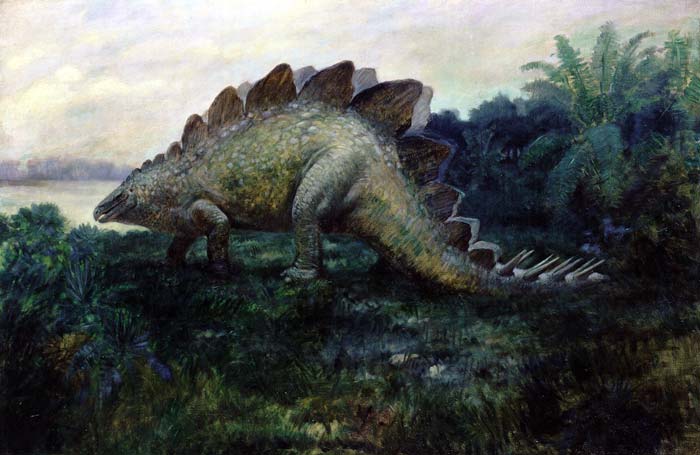

As a child I can recall stegosaurus being my favorite dinosaur. I had an orange and red hollow plastic stegosaurus that was my buddy.
One of the more recognizable dinosaurs, stegosaurus (meaning roof lizard) has a distinct spiked tail and large plates on its back (more on those later). About the size of the bus, this herbivore used its aggressive appearance as a defense.
While it is still up for inquiry, some believe the plates on the stegosaurus' back helped cool the dinosaur. The large surface area would help the most amount of skin come in contact with the wind.
I like this idea the best, it would mean the stegosaurus was the prototype for modern day refrigeration equipment. Simply put, the hot gas travels through a coil that has fins attached to it (all to increase the surface area of a given space), and as the gas is exposed to more and more wind it releases its heat. Its amazing how many intricate and detailed systems we create are just innovations on what already exists in nature.
Sources: Stegosaurus Fact sheet at Enchantedlearning.com
Wikipedia
Sunday, December 19, 2010
Troodon

On Des's favorite tv show, Dinosaur Train, the Troodons (pronounced TROH-o-don), operate the train. Lacking modesty, the Troodons constantly proclaim themselves as the smartest dinosaurs.
This is because fossil records show that the Troodon had the largest brain according to its body size. Scientists think the Troodon was about as smart as modern day birds.
Troodons lived in North America in the late Cretaceous period, about 70 million years ago.
Troodon was a carnivore, with sharp teeth and a toe claw. Not as big as the Deinonychus's toe claw, but still deadly. Troodon was a bipedal theropod, who probably ran very fast.
Some paleontologists theorize that Troodon was nocturnal because of their large eye sockets.
Troodon on Dinosaur Train:

Sources: http://www.enchantedlearning.com/subjects/dinosaurs/facts/Troodon/
Dinosaur Train
Thursday, November 25, 2010
Lambeosaurus (Lam-bee-oh-sore-uss)
It's been a crazy couple of months. I went from super pregnant to now trying to figure out how to take care of an infant and a 2.5 year old. I do hope to post regularly someday soon.

Lambeosaurus was a large Hadrosaur. They lived in the late Cretaceous period in North America.
Lambeosaurus was an herbivore. They had a large crest on their head that looked like an axe. Some scientist believe that the crest was used to make sounds so they could communicate with each other.
Check out how big the Lambeosaurus was:

Sources:
http://en.wikipedia.org/wiki/Lambeosaurus
http://www.kidsdinos.com/dinosaurs-for-children.php?dinosaur=Lambeosaurus
http://www.atomicthinktank.com/viewtopic.php?f=14&t=20940&start=3585
http://commons.wikimedia.org/wiki/File:Lambeosaurus_magnicristatus_DB.jpg

Lambeosaurus was a large Hadrosaur. They lived in the late Cretaceous period in North America.
Lambeosaurus was an herbivore. They had a large crest on their head that looked like an axe. Some scientist believe that the crest was used to make sounds so they could communicate with each other.
Check out how big the Lambeosaurus was:

Sources:
http://en.wikipedia.org/wiki/Lambeosaurus
http://www.kidsdinos.com/dinosaurs-for-children.php?dinosaur=Lambeosaurus
http://www.atomicthinktank.com/viewtopic.php?f=14&t=20940&start=3585
http://commons.wikimedia.org/wiki/File:Lambeosaurus_magnicristatus_DB.jpg
Thursday, October 14, 2010
Elasmosaurus.
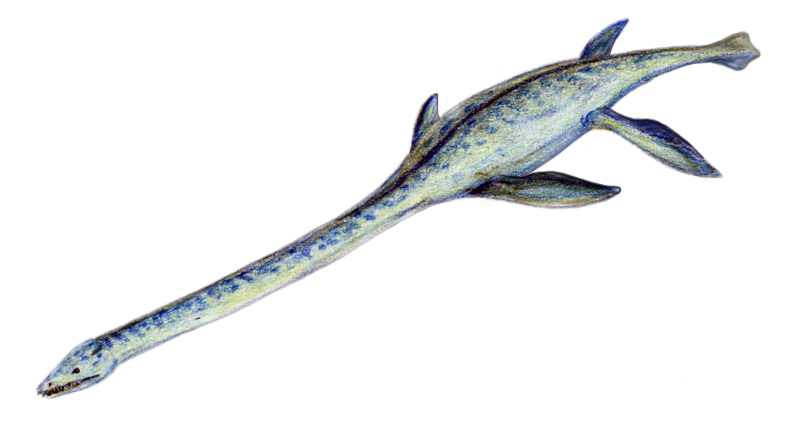
I am deciding to dive into the ocean for my first post and introduce everyone to the elasmosaurus! There is a character in the show Dinosaur Train named Elmer, and he is an elasmosaurus who they meet on their underwater adventure.
This dinosaur is half neck and has 71 vertebrae, more than any other animal. Elasmosaurus is a plesiosaur who lived in the late Cretaceous period. At 45' they were about the size of a shipping container, and weighing in around 9000 pounds.
Due to their large size, it was thought that they used their long necks to stalk and prey on schools of fish, rather than engaging in a chase.
Sources: Wikipedia, About.com
Wednesday, October 6, 2010
Eoraptor

I've been slacking with this blog. I know.
The Eoraptor! I got Des a book with the Eoraptor and I have been pronouncing it wrong. I was saying what sounding like "your raptor."
Des kept asking me to read about "my raptor." hahahah
The correct pronunciation is: EE-oh-rap-tore.
The Eoraptor was an early tiny predator. He lived in the forests of South America during the middle of the Triassic Period. The Eoraptor was not a true raptor.
To read about raptors: http://dinosaurs.about.com/od/typesofdinosaurs/a/raptors.htm
Sources: http://dinosaurs.about.com/od/carnivorousdinosaurs/p/eoraptor.htm
Friday, September 24, 2010
Spinosaurus

If you've seen Jurassic Park 3, then you've seen this guy.
He may be the biggest carnivore, even bigger than the giganotosaurus. Because of his long jaw, scientists think the spinosaurus ate fish, very similar to the modern crocodile.
Spinosaurus lived during the Cretaceous Period in North Africa.
Picture from this site: http://wargames.spyz.org/convSALAMANDER.html
Info from here: http://en.wikipedia.org/wiki/Spinosaurus
Monday, September 20, 2010
Parasaurolophus or Charonosaurus?

I see this dinosaur a lot. In dinosaur books, stickers, magnets, etc, but I never see the name of this dinosaur!
I did some research and there are two very similar dinosaurs that this could be.
Parasaurolophus lived in the woods of North America during the late Cretaceous period.
Charonosaurus's lived in the woods of Asia also during the late Cretaceous period.
Charonosaurus was slightly bigger, but other than that, they were similar.
Both were hadrosaurs, quadrupedal herbivores that lived in packs, like deer, cows, etc.
Info from: http://dinosaurs.about.com/od/typesofdinosaurs/a/hadrosaurs.htm
http://dinosaurs.about.com/od/herbivorousdinosaurs/p/parasaurolophus.htm
and
http://dinosaurs.about.com/od/herbivorousdinosaurs/p/charonosaurus.htm
Saturday, September 18, 2010
Biggest Dinosaur Found (as of September 2010)

Information and Picture from: http://dinosaurs.about.com/od/herbivorousdinosaurs/p/argentinosaurus.htm
Name:
Argentinosaurus (Greek for "Argentina lizard"); pronounced ARE-jen-teen-oh-SORE-us
Habitat:
Forests of South America
Historical Period:
Middle Cretaceous (100-90 million years ago)
Size and Weight:
Up to 130 feet long and 110 tons
Diet:
Plants
Distinguishing Characteristics:
Enormous size; long neck; relatively small head
About Argentinosaurus:
As you may have guessed from its name, the remains of Argentinosaurus were dug up in present-day Argentina, in South America. To date, researchers haven't found an entire skeleton, but what they have found--four-foot long vertebrae and five-foot-long tibiae--indicate that Argentinosaurus was a truly titanic sauropod (hence its classification in some circles as a titanosaur).
Interestingly, the remains of Argentinosaurus were dug up near the fossils of another huge dinosaur--the carnivorous theropod Giganotosaurus. This has led paleontologists (and TV producers) to speculate that packs of Giganotosaurus may have hunted down full-grown Argentinosaurus adults--a chase that would have been deadly for any smaller creatures that happened to get in the way! (By the way, paleontologists in India have uncovered the remains of a possible titanosaur, Bruhathkayosaurus, that may have been even bigger than Argentinosaurus; the trouble is, no one is exactly sure what type of dinosaur this was!)
Thursday, September 16, 2010
No Such Thing as a Brontosaurus

All info taken from: http://www.dinosaurfacts.org/apatosaurus
PHYSICAL DESCRIPTION
The Apatosaurus is the new name for Brontosaurus (which is this dinosaur’s popular title and the one that most people will know it by)At most the Apatosaurus could only hold its head up about 17 feet off the ground. However, the Apatosaurus was 70 feet long. It was among the largest of the dinosaurs. This large dinosaur tipped the scales at a staggering 80 thousand pounds (or 36,000 kg for the Europeans out there). The dinosaur resembles a smaller brachiosaurus, however, its neck stayed vertical to the ground for the most part. The neck of this dinosaur was very inflexible and it has been said that the dinosaur generally could not have raised it's neck very far off of the ground. This is due to the poor blood flow this animal would have had. If it was able to raise it's head straight up it's heart wouldn't have been able to pump blood to the head, thus killing the dinosaur over time.
LIFESTYLE
The Apatosaurus was another large plant eating animal. The tail was used as a giant counterweight due to the fact that the Apatosaurus could not put his head up in the air. Since the neck was so massive to ensure proper locomotion the tail had to be considerably large.The neck was most likely so long due to the fact that the Apatosaurus would have to eat a considerable amount of vegetation to sustain its girth. In order to eat so much food Apatosaurus would keep rocks in its stomach, so that it could swallow vegetation whole. The rocks would then esentially "chew" the food. The Apatosaurus would most likely use its neck to split through trees. Or it's neck may have been used to eat out of marshy areas that the Apastosaurus couldn't have traveled into, so it reached it's head in. The Apatosaurus was very low on the scale of intelligence in the dinosaur kingdom, and most likely moved very slow. The Apatosaurus was so large that, unlike most other dinosaurs, it had trouble staying cool (versus staying warm) and spent most of its time under a forest canopy or partially in the water.
HISTORY
Apatosaurus fossils have been found in Arizona, Colorado, Utah, and Wyoming, United States. They probably lived here because of the mass of vegetation that would have been found here that long ago. No Apatosaurus beds have been found which contain a significant number of Apatosaurus skeletons therefore it is theorized that they did not travel in herds (unlike what the land before time may have alluded to).
The Apatosaurus lived during the late Jurassic Period, about 157-146 million years ago. There was a minor mass extinction toward the end of the Jurassic period. During this extinction, most of the Apatosarus' would have died out.
DID YOU KNOW?
At first when the brontosaurus was found, scientists believed that it was a different animal then an apatosaurus. However, it turns out that a brontosaurus was just an adult apatosaurus.
The apatosaurus probably had lips like that of a moose or a horse.
Many early scientists believe that the neck of the apatosaurus was so large so that it could traverse large lakes, however it has been proven that the body of the animal would crush under that much pressure.
CLASSIFICATION
Kingdom: Animalia
Phylum: Chordata
Class: Sauropsida
Family: Diplodocidae
Genus: Apatosaurus
Species: A. Excelsus
LIFESTYLE
HISTORY
DID YOU KNOW?
The apatosaurus probably had lips like that of a moose or a horse.
Many early scientists believe that the neck of the apatosaurus was so large so that it could traverse large lakes, however it has been proven that the body of the animal would crush under that much pressure.
CLASSIFICATION
Phylum: Chordata
Class: Sauropsida
Family: Diplodocidae
Genus: Apatosaurus
Species: A. Excelsus
Wednesday, September 15, 2010
New Blog
My 2.5 year old has gotten very interested in dinosaurs and so have I. I decided to start this blog for him. Together we will learn all about dinosaurs!
Subscribe to:
Posts (Atom)